

In short:
- Need to justify a new Warehouse Management System (WMS)?
Our Benefit Assessment Framework helps you build a strong business case by uncovering operational, financial, and customer gains — all benchmarked to industry best practice.- More than tech — it’s strategic transformation.
We apply Lean principles to identify root causes, measure performance, and quantify impact, helping you plan a smarter, future-ready warehouse.- Four clear steps to success.
From benefit identification to ROI modelling, our structured approach delivers actionable insights and a tailored roadmap to drive warehouse efficiency and resilience.6 minute read
Unlock the full potential of your warehouse operations with our comprehensive Warehouse Management System Benefit Assessment and Optimisation Framework. Designed to drive your business towards operational excellence, our framework delivers a detailed evaluation of your existing processes, benchmarking them against best-in-class standards. Whether your goal is to increase efficiency, reduce costs, or enhance customer satisfaction, our service provides actionable insights and a clear roadmap for future success.
By leveraging advanced technologies and Lean principles, we ensure your operations are not only optimised for today but are also resilient and scalable for the challenges of tomorrow. Our expert approach helps future-proof your business, enabling you to adapt to evolving market demands while maintaining performance and compliance.
Partner with us to build a compelling business case for your new Warehouse Management System, underpinned by tangible value and transformative outcomes. Discover the pathway to streamlined, future-ready warehouse management and elevate your operational performance.
This process follows four tried and tested steps, illustrated in Figure 1: the FourPL WMS Benefit Assessment Process.
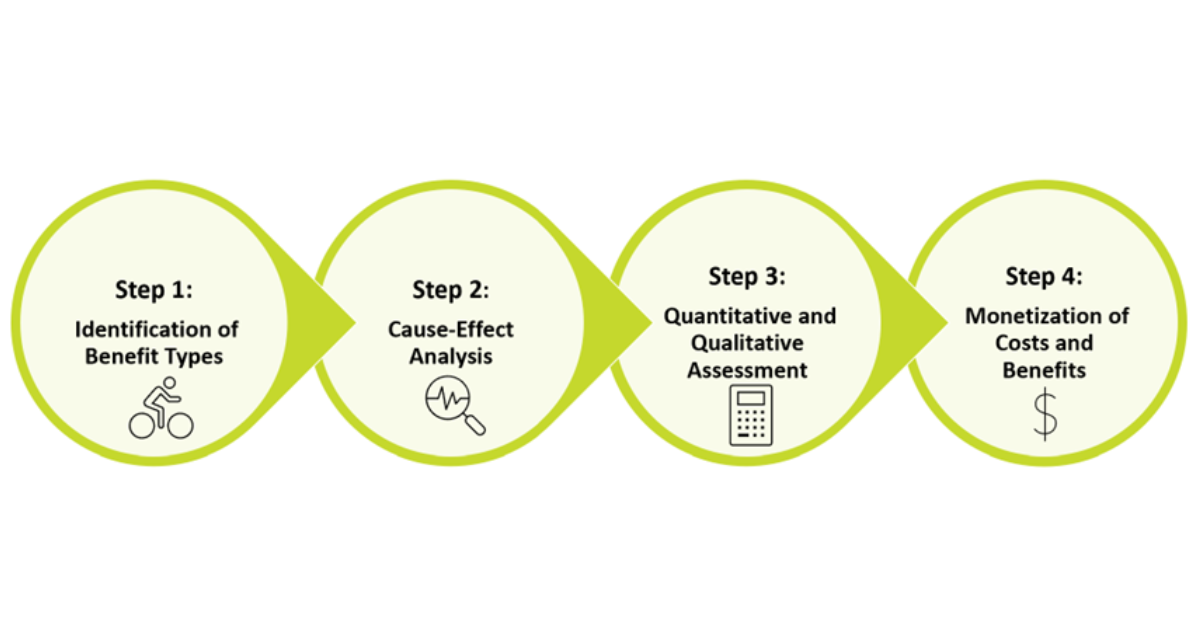
The assessment applies Lean principles and ensures future readiness by incorporating leading-edge technologies. Our structured framework includes the following four key steps:
1. Identification of Benefit Types
Purpose: To categorise the various types of benefits a new Warehouse Management System (WMS) can deliver.
- Operational Benefits: Improvements in inventory accuracy, order processing speed, and space utilisation.
- Financial Benefits: Cost savings through reduced labour, lower inventory holding costs, and improved financial control.
- Customer Benefits: Enhanced satisfaction through faster, more accurate deliveries.
- Strategic Benefits: Gaining competitive advantage through increased efficiency and scalability.
- Regulatory and Compliance Benefits: Ensuring compliance with industry standards to avoid penalties and support reputation.
2. Cause-Effect Analysis
Purpose: To uncover the root causes of current inefficiencies and how the new WMS can resolve them.
- Root Cause Identification: Applying tools such as the ‘5 Whys’ and Fishbone Diagrams to pinpoint operational issues.
- Effect Analysis: Evaluating how WMS implementation can address these problems for measurable gains.
- Impact Mapping: Visualising the direct and indirect benefits across warehouse operations.
- Risk Analysis: Identifying risks related to WMS deployment and developing mitigation plans.
3. Quantitative and Qualitative Assessment
Purpose: To provide a well-rounded evaluation of the WMS implementation’s effectiveness.
- Quantitative Assessment: Using KPIs to measure improvements in fulfilment times, inventory accuracy, and cost reduction.
- Qualitative Assessment: Gathering stakeholder and employee feedback on satisfaction and workflow changes.
- Benchmarking: Comparing performance against industry standards and best practice benchmarks.
- Employee Training and Adaptation: Assessing workforce readiness and training effectiveness in adopting the new system.
4. Monetisation of Costs and Benefits
Purpose: To translate the assessment into financial terms, building a compelling business case.
- Cost Analysis: Calculating the total cost of ownership (TCO), including implementation, training, and support.
- Benefit Valuation: Estimating monetary value of benefits such as reduced labour, fewer errors, and increased throughput.
- Return on Investment (ROI): Demonstrating the long-term value and financial return from the WMS.
- Payback Period: Estimating how long it will take to recover the initial investment.
- Long-Term Financial Projections: Forecasting ongoing cost savings and improvements over time.
Engaging with our Comprehensive Warehouse Management System Benefit Assessment and Optimisation Framework provides unparalleled visibility into your warehouse operations. Our expert analysis identifies key opportunities for efficiency, cost reduction, and improved customer service.
You’ll receive a tailored, actionable roadmap to prepare your warehouse for both immediate improvements and future resilience. This process empowers you to build a solid business case for a new WMS, supported by clear, quantifiable benefits that drive operational excellence and sustainable growth.
Contact Us
